Is Tantra a Religion? Can a Christian Practice It? 🕊️
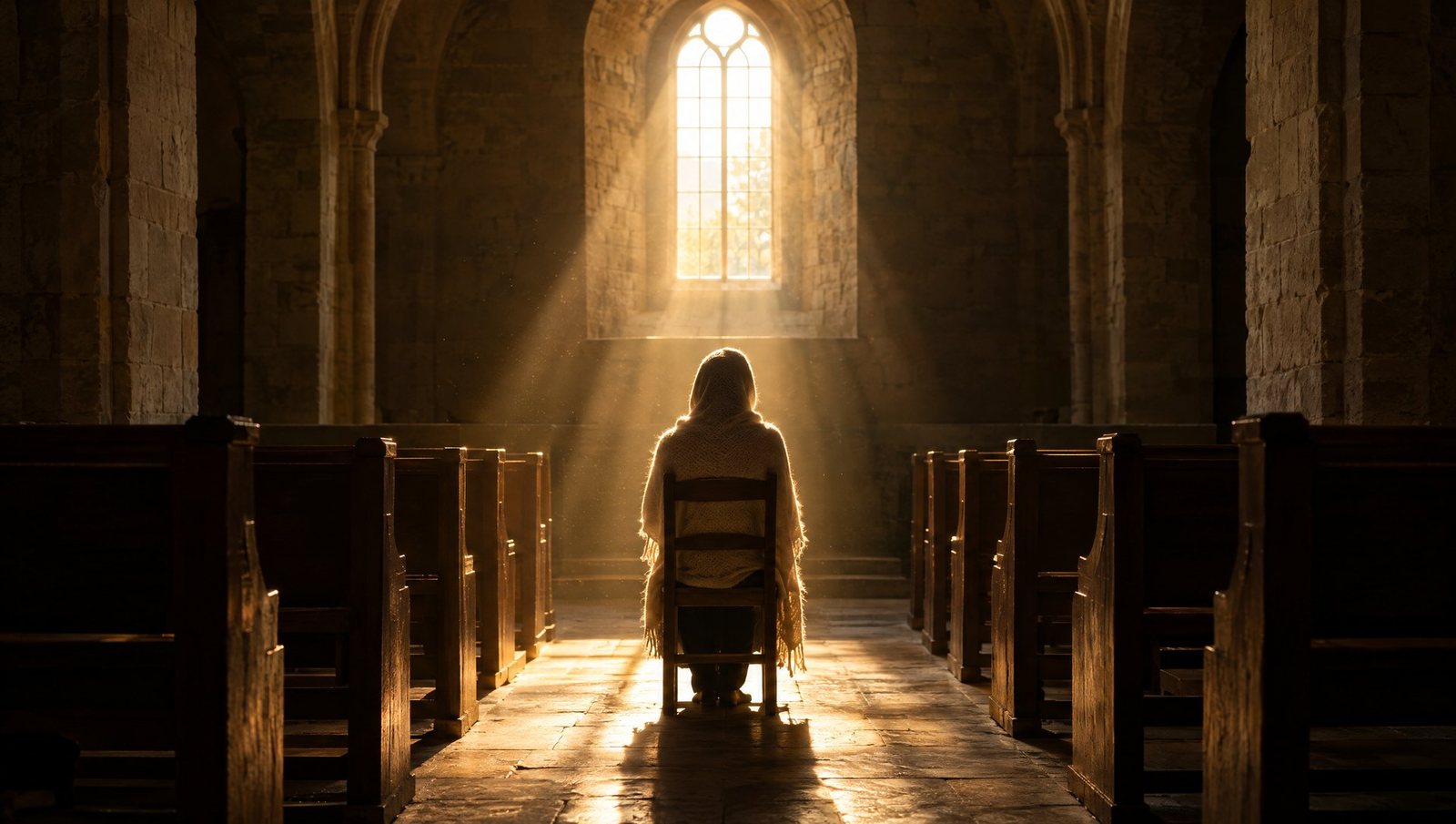
Not a religion. Not an ism. Tantra is a spiritual science, and a science belongs to anyone who practices it.
Whether you are a Christian, a Jew, a Muslim or someone with no religion at all, one question comes before every other: will this practice ask me to give up what I believe?
Here is my case. You do not have to leave your faith to practice Tantra. A religion is defined by what it asks you to believe, and Tantra asks you to accept nothing on faith; it asks you to practice. The practice at its heart trains attention, a discipline every great contemplative tradition knows, Christianity included. And the largest church in the world has written that the ways of other traditions should not be rejected simply because they are not Christian.
What Makes Something a Religion ⚖️
A religion asks for belief. A method asks for practice.
A religion offers a creed to accept, a way to worship, sacred rites, a community to join and an authority that speaks for it. Tantra asks you for none of these. It has what every science has: a defined procedure, a predicted result, and a way of checking the result that anyone can repeat. You are not asked to accept a single statement on faith. You are asked to practice, and to see what happens.
That is why Tantra asks no one to change their faith. Anyone of any caste, creed or religion who works to expand their mind is already walking its path. Every faith is welcome, and so is no faith at all.
Tantra does come from India, and many assume that makes it part of Hinduism. But where something was discovered does not decide who it belongs to. The numbers you count with were born in India and reached Europe through the work of Middle Eastern mathematicians, and nobody converts to anything to count to 10. Tantra grew up in India among several religions, and it shaped Hindu, Buddhist and Jain practice alike, which is exactly what you would expect of a method rather than a creed.
Your Faith Already Knows This Discipline 🙏
Gathering attention belongs to no single religion, and Christianity has practiced it for centuries.
Strip Tantric meditation down to what you actually do and you find a simple act: you sit still, gather your attention, and hold it on one point until the mind grows quiet and deep.
Christianity has asked for its own discipline of attention for a very long time. In The Way of a Pilgrim, a classic of Russian Orthodox spirituality published in 1884, a spiritual father tells a wandering pilgrim to repeat the Jesus Prayer 3,000 times a day, then 6,000, then 12,000. Catholic and Protestant contemplatives have their own traditions of silent prayer. A Christian who learns to gather attention is not borrowing a foreign religion. They are training a capacity their own tradition has long prized.
Some ask whether Tantra is witchcraft, whether it calls on spirits. It is not. Witchcraft, in the sense the question means, uses spells and spirits to make things happen in the world. Tantric meditation casts no spell and calls on no spirit. Its sounds are tools for attention, and all of its work happens inside your own mind.
You may be thinking that your church would never accept it. Some churches may say no, and you will decide for yourself. But it is worth knowing what the largest of them has actually written. In 1965, the Second Vatican Council declared that "the Catholic Church rejects nothing that is true and holy in these religions." In 1989, the Vatican wrote a letter to the bishops of the Catholic Church on Christian meditation. It warned of the risks of mixing other methods into Christian prayer. It also wrote that one "can take from them what is useful so long as the Christian conception of prayer, its logic and requirements are never obscured." You keep your faith and your prayer. The practice deepens the attention you bring to them.
The Only Way to Know 🔬
You do not have to settle this by argument, mine or anyone else's.
Practice for a few weeks and watch what happens: to your attention, to your inner stillness, to your prayer if you pray. If the practice took anything from your faith, you will know. If it gave you a deeper stillness to bring to it, you will know that too.
Every faith is welcome. Test it yourself.
Published · Updated
Comments
Loading comments...