Does Tantra Really Work? What Scientists Measured 🌡️
Yes, and you do not have to take anyone's word for it, including mine.
Every spiritual path promises something. Most of those promises can never be checked, so you are left to believe them or not. Tantra makes claims you can check, in a laboratory and in your own life.
Here is my case. Tantra works by a standard you can verify. It makes specific claims about what its practice does. When scientists measured Tantric meditation, the effects were specific and measurable, and they were not ordinary relaxation. And the final test is the one you run yourself.
What "Works" Should Mean 🔬
A practice works when it produces a specific result that anyone can check.
Feeling better after a quiet hour proves very little, because almost anything quiet will do that. A real claim names its result in advance, and the result has to show up when the practice is done the right way. That is the standard of every science, and it is the standard Tantra sets for itself: a defined procedure, a predicted result, and a way of checking it that anyone can repeat.
What the Laboratory Found 🌡️
When scientists measured Tantric meditation, it did not behave like relaxation.
For decades, research described meditation as a relaxation response: the heart slows and the body calms down. In 1978, a study in the Archives of General Psychiatry measured practitioners of Tantric Yoga meditation and found the opposite. The proficient meditators' nervous systems grew more active during meditation, while the beginners simply relaxed. The proficient group showed more alpha and theta brain activity and almost no sign of sleep. In one of them, the researchers recorded a sudden surge of activation, which the meditator described as an approach to the ecstatic state of intense concentration. The authors concluded that their findings challenge the relaxation model of meditation.
The same pattern appeared 36 years later in another Tantric tradition. In 2014, researchers compared 2 families of Buddhist meditation: Theravada, and Vajrayana, which they note is also called Tantric Buddhism. The Theravada practices relaxed the body, and the Vajrayana practices activated it. Different methods produced different, measurable states, exactly as a science of practice would predict.
A year earlier, a team led by Maria Kozhevnikov, one of the authors of that study, had measured g-Tummo, an inner-heat meditation from the same Vajrayana tradition. The practitioners raised their body temperature from normal into the range of a slight to moderate fever, up to 38.3°C (about 101°F), while volunteers who copied only the breathing managed small, brief rises within normal body temperature.
Some will call this placebo: people feel what they expect to feel. Expectation can change how you feel. It struggles to explain what the instruments recorded. The nervous systems of experienced meditators grew more active while those of beginners relaxed. Body temperature climbed into the fever range when the full practice was done, and stayed normal when only the breathing was copied. Placebo can explain why people feel better. It cannot easily explain why different methods produce different, even opposite, states that a machine can measure.
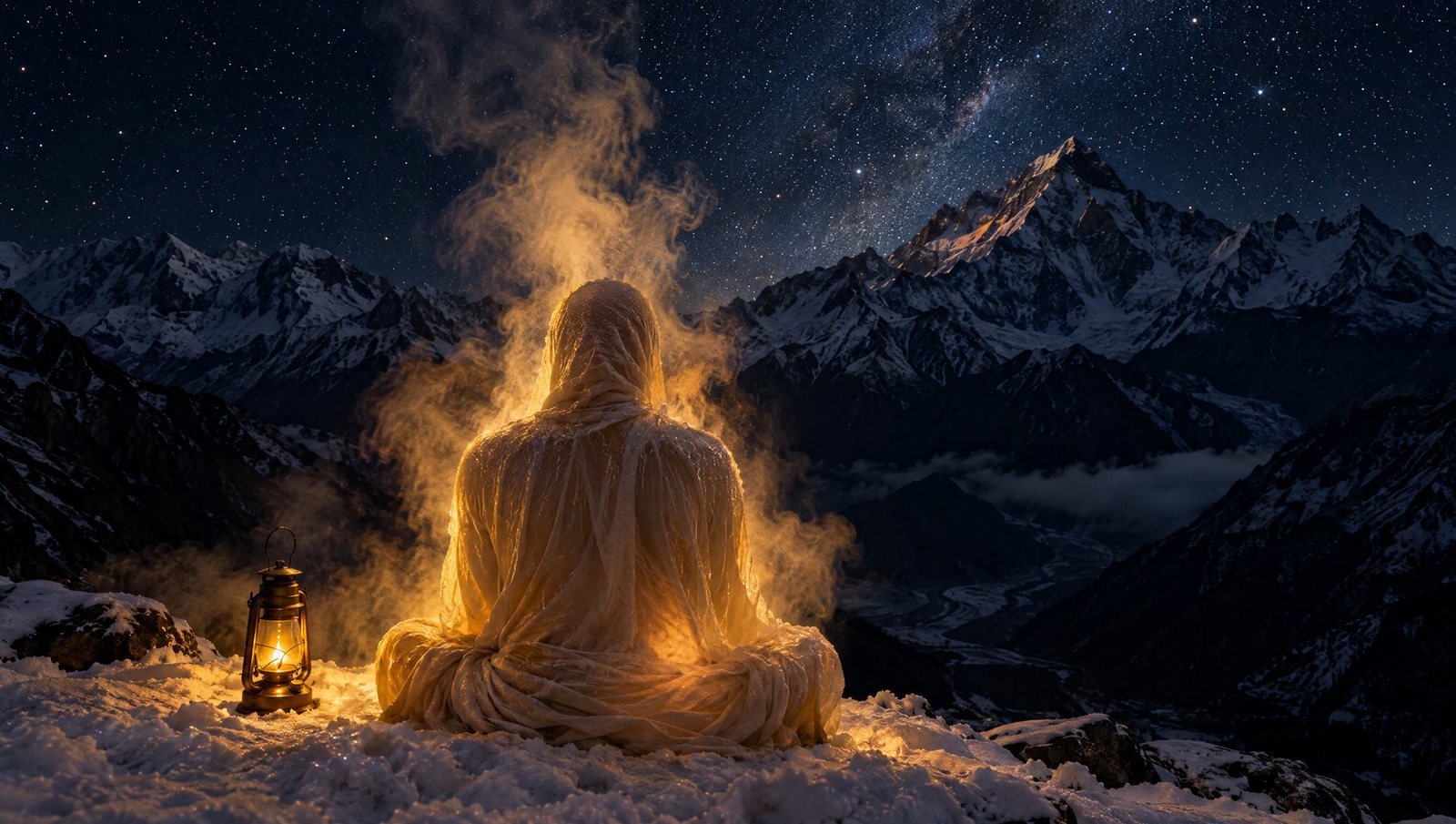
You may have heard that monks can melt snow with their bodies, and it sounds like a legend. Some of those stories are exaggerated, and the researchers said so themselves: the 2013 study is titled "Legend and Reality." That is exactly the attitude to take. Do not believe a legend about Tantra, and do not believe a legend against it. Believe what was measured, and then measure it yourself.
The Test That Matters Most Is Yours 🧪
No study can do your practice for you.
The laboratory can show that Tantric meditation does something specific to the body and the brain. It cannot tell you what it will do in your life. That test is yours, and it is simple to run: practice the same method, the same way, every day for some weeks, and watch for what the practice says will change. Does your mind settle sooner when you sit? Can you find the witness behind your thoughts, the part of you that watches them? Does your thirst begin to turn inward? Write down what you find. That is your data.
Perhaps you tried meditating once, and nothing happened. Most people were handed a technique with no map, so what failed was the technique, not the person. A fair test needs the right method, practiced the right way, for long enough to show a result. Give it that, and then judge it.
Spirituality you cannot test is only belief. Tantra can be tested. Test it yourself.
Published · Updated
Comments
Loading comments...